Views: 0 Author: Site Editor Publish Time: 2025-06-17 Origin: Site
In the rapidly evolving world of modular architecture, container-based structures are at the forefront of innovation. Their ability to deliver cost-effective, quick-to-build, and adaptable solutions has made them a preferred choice across industries—from construction and emergency housing to retail and education. Among the various container housing formats available today, two of the most prominent types are the Detachable Container House and the Flat Pack Container House.
Each type has distinct characteristics, and understanding the differences between them is essential for project planners, developers, and procurement managers looking to make informed decisions. This article compares their design, assembly methods, transportation efficiency, application scenarios, and cost-effectiveness to help you select the right type for your needs.
The Detachable Container House is composed of prefabricated structural components—such as columns, top and bottom frames—that are manufactured in the factory and then shipped as individual parts. On-site assembly is straightforward: with only basic tools, three workers can complete the setup in just three hours using bolts and nuts. This makes it highly convenient for rapid deployment and relocation.
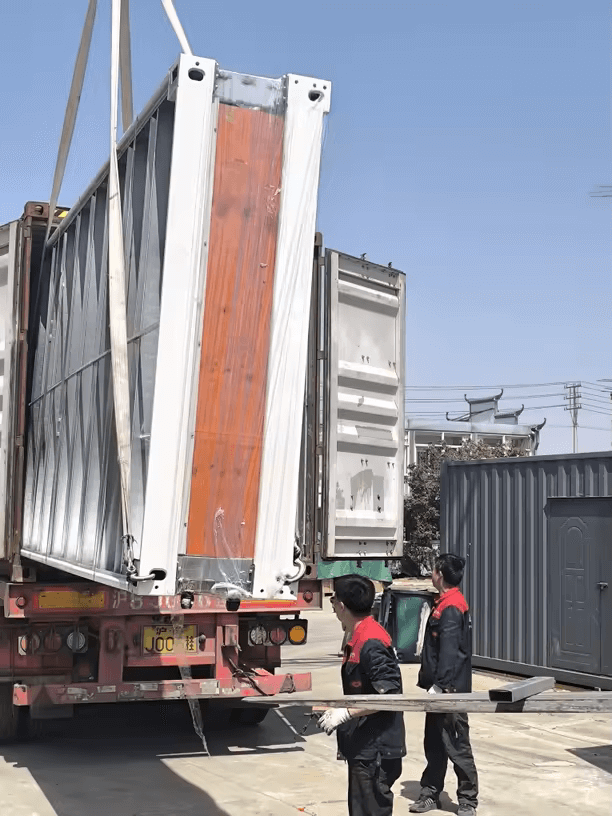
In contrast, the Flat Pack Container House features a partially preassembled structure. Its roof and floor are fully welded in the factory to form a stable base unit. The side wall panels, windows, and doors are bundled separately in a compact “sandwich-style” package for transportation. Due to the integrated top and bottom frame, a crane is typically required for lifting and positioning during installation, which may increase setup complexity but enhances structural rigidity.
Each system has unique advantages depending on transportation logistics, site conditions, and project timelines. While Detachable units offer lightweight flexibility and easy manual assembly, Flat Pack models provide higher strength and improved weather resistance through factory-welded frames.
The Detachable Container House features low transportation volume, cost efficiency, and on-site assembly. Structural components including steel frames, insulation panels, flooring systems, windows, and wiring (with exposed wires after assembly) are all installed on-site. Upon delivery, these components can be quickly reconnected on-site, typically within a few hours.
The structure maintains its integrity across multiple assembly-disassembly cycles, making it ideal for reuse in multiple locations over time.
Key Features:Constructed with a robust steel frame and interlocking joints to ensure structural stability, each unit is typically completed within 3-4 hours. Designed for repeated disassembly and relocation, it perfectly meets dynamic and mobile operational requirements. However, as components are secured with screws and nuts, its waterproof performance is limited, making it less than ideal for rainy weather conditions.
A Flat Pack Container House are delivered as tightly packaged components that can be assembled on-site using manual labor or light machinery. All components—including walls, roofs, floors, sockets, and wires (the latter being concealed)—are prefabricated in factories, significantly reducing installation time. The site only needs to be connected to the integrated circuit.Compared to detachable structures, this assembly method proves simpler. This type of housing is the optimal choice for both single-use applications and long-term semi-permanent setups.
Key Features:Flat Pack Container House, while more expensive to transport, offer superior waterproofing and structural stability, along with higher reuse rates and extended durability. These advantages make them an ideal choice for cost-effective large-scale deployment. Although each unit may require additional crane rentals for assembly, they remain the optimal solution in countries prone to heavy rainfall.
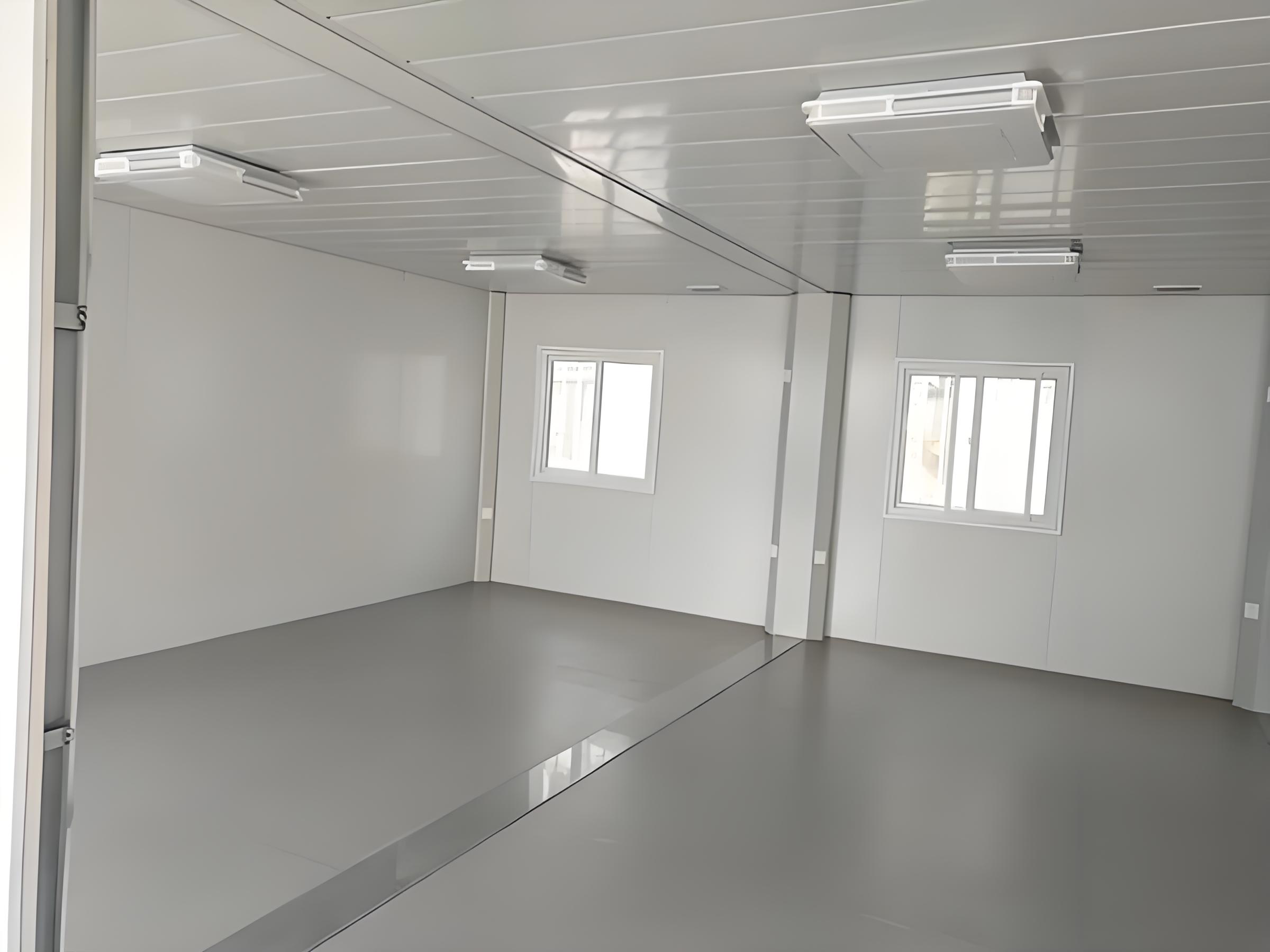
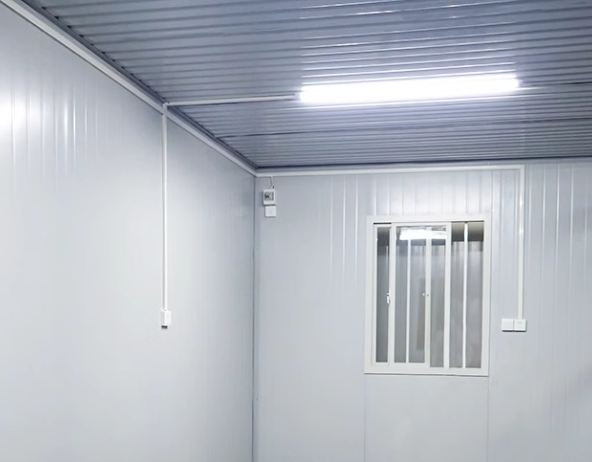
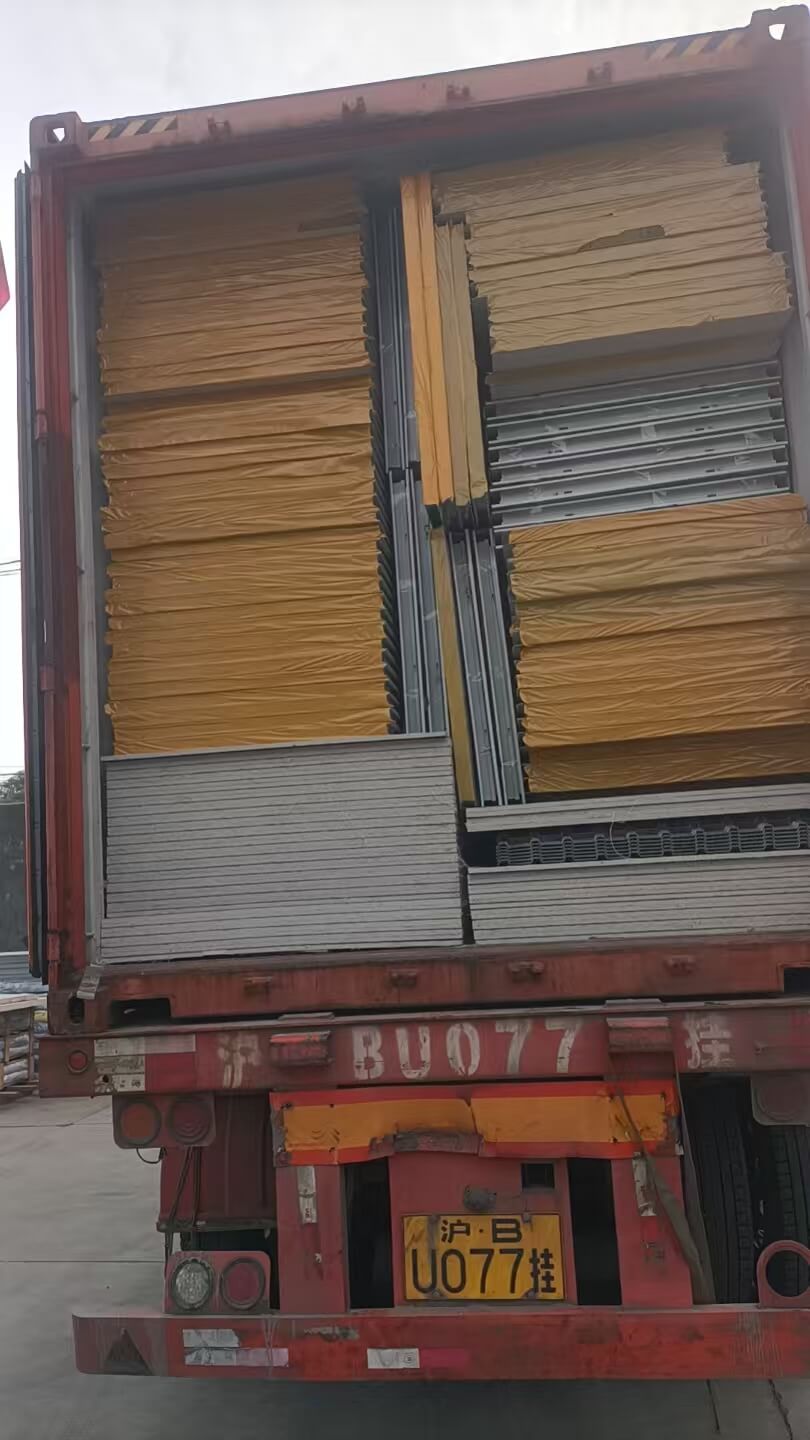
It performs well in terms of logistics density. A standard 40-foot shipping container can carry up to 16-17 fully equipped folding units, significantly reducing the transportation cost per unit. This makes it particularly attractive for long-distance international transport and batch deployment.
While Flat Pack Container Houses are partially disassembled for transportation, their top and bottom remain intact and non-removable. This design allows fewer units per container or truck load while maintaining size constraints based on shipping container dimensions. For example, a 40-foot container may transport up to six flat-pack units depending on its configuration. However, the rapid on-site assembly process effectively compensates for the lower transportation density.
If your project requires frequent relocation, seasonal adjustments, or repeated use across multiple sites, the Detachable Container House stands out as the optimal solution. Its modular design allows for quick relocation with minimal labor and downtime, making it highly efficient for dynamic environments. The structure maintains strong durability even after multiple assembly and disassembly cycles, ensuring long-term reliability. Additionally, it offers scalability, enabling you to easily expand or reduce the number of modules based on changing needs. Common applications include mobile construction site offices and worker dormitories, military and remote exploration camps, temporary schools or healthcare centers, and emergency shelters in regions prone to recurrent natural disasters, providing flexible, durable, and cost-effective shelter solutions.
Flat pack container houses are particularly well-suited for projects requiring single or long-term setups. ations, remote worker accommodations in mining or oil sectors, long-term storage facilities, site administration buildings, as well as exhibition booths or event centers that are used intermittently.
Both housing types offer excellent cost-performance compared to traditional construction, but they differ in where those savings come from.
Although the initial unit cost of detachable container houses is higher due to advanced prefabrication processes, they benefit from significantly lower on-site labor expenses. Additionally, their superior durability reduces long-term maintenance costs, resulting in a higher return on investment, especially in projects requiring frequent relocation and reuse.
Flat pack container houses feature lower unit and shipping costs due to their compact, flat-packed design, but they require higher assembly labor costs on site. They are ideal for single-use or semi-permanent applications, offering greater economy when deployed in large quantities and remaining stationary. A thorough cost-benefit analysis should consider factors like duration of use, relocation frequency, unit volume, and site distance to maximize ROI.
Choosing between a Detachable Container House and a Flat Pack Container House involves more than just cost—it's about aligning functionality with your project’s environment, logistics, and long-term use goals.
Below is a detailed comparison based on key performance indicators:
| Criteria | Detachable Container House | Flat Pack Container House |
|---|---|---|
| Assembly Speed | Fast – fully assembled by 3 workers in 2–3 hours without machinery | Slower – requires crane, takes 1–2 days depending on setup |
| Transport Efficiency | Very high – up to 16–17 sets per 40ft container | Moderate – typically 6 sets per 40ft container |
| Installation Requirements | Manual only – no crane needed; assembled with screws and nuts | Requires crane for lifting; minimal on-site assembly |
| Electrical Setup | External wiring; all sockets and wires installed on-site | Pre-installed internal wiring; plug-and-play connection |
| Water Resistance | Basic – not waterproof unless a separate roof is added | Excellent – factory-sealed structure for reliable waterproofing |
| Size Flexibility | Highly customizable – not limited by container dimensions | Limited – must conform to container dimensions for transport |
| Reusability | High – ideal for relocation and temporary projects | High – especially for semi-permanent or repeated use |
| Durability | Moderate – suitable for short-term or fair-weather environments | High – stronger build and longer service life |
| Cost | Lower upfront cost for long-distance transport; slightly higher assembly labor | Slightly higher shipping cost; lower installation labor |
When it comes to high-quality container housing, Nanjing Palin Integrated Housing Technology Co., Ltd. is a trusted industry leader. With years of manufacturing expertise and global project experience, the company offers:
Custom-engineered Detachable and Flat Pack solutions
Precision manufacturing in ISO-certified facilities
Full-service support from design to deployment
Competitive pricing with a strong focus on sustainability
Successful case studies in over 50 countries
Whether you're working on a construction project, a government housing initiative, or a commercial temporary space, Nanjing Palin provides tailored container solutions that are reliable, scalable, and cost-efficient.


